
Trail Heritage Sites
Trail Heritage Sites
A. Indigenous Heritage
The Waterfront Trail Rotary Community Action Team are honoured to live, work and play on the traditional territory of the Anishinabek, which includes the Ojibwa of Fort William First Nation, signatory to the Robinson-Superior Treaty of 1850. We also acknowledge the contributions of the Métis peoples to our community and we recognize that the land is also now home to many diverse First Nations, Inuit, Metis and people from many nations. Land acknowledgements vary from region to region. From time to time, they make mention of WATER WITH REFERENCES TO WATER BEING SACRED, AND WATER BEING LIFE! The WTRCAT thinks that reference is especially important given what the group is trying to do with a multi-use trail that would allow people and visitors alike to move along the shoreline of Anishnaabe Gichigami in the shadows of Nanibijou and Anemki Wajiw immediately around Thunder Bay without any personal cost to do so, a Trail for ALL PEOPLE.
History along Waterfront Trail Roll and Stroll 2 kilometer route (Research courtesy of Thunder Bay Museum):
Prince Arthur’s Landing (See photo below)
The area commonly referred to as Prince Arthur’s Landing began to develop in the 1850s when the North-West Transportation Company built a depot there. It was expanded as the starting point for Simon Dawson’s road to Lake Shebandowan (and eventually the Red River colony) and as the headquarters for Col. Wolseley’s Red River Expedition in 1870, with minor fortifications built at that time. Prince Arthur’s Landing was renamed the town of Port Arthur in 1884, but today Prince Arthur’s Landing is still used to describe the waterfront development in this area.
Mouth of McVicar Creek (See photo below)
Named for the McVicar family - Retired fur trader Robert McVicar cleared land around this creek in the late 1850s, the first settler in what would become Prince Arthur’s Landing, which his family would later purchase. (The family also owned land in what would become the commercial heart of Fort William.) Many of early Port Arthur’s prominent families built luxurious houses on and around McVicar Creek. The first bridge over Court St. was built in 1885.
Perry’s Boatyard (See photo below)
Not a great deal is known about this company, but they produced and repaired small craft (including small logging and fishing boats) and marine engines. The business was started by Simon Perry in the 1940s and operated by his family until the 1980s. Today, the area is occupied by the HMCS Griffon boatyard.
First CPR Station (across the tracks, foot of Van Horne St.)(See photo below)
Few likely know the first CPR station in Port Arthur was built this far north. The McVicar family had signed an agreement with the CPR to place its station on their property surrounding McVicar Creek, but the commercial centre of the growing town did not develop in that direction to their frustration. (Along with the CPR shifting its focus to Fort William instead of Port Arthur). The station burned down, and later in 1907, a new CPR Station was built on Water St., closer to the downtown Port Arthur Core (which was later itself demolished).
Manitoba Pool #2 (See photo below)
This looming abandoned grain elevator is on the historically significant site of the Lakehead’s first grain elevator. Built by the Canadian Pacific Railway in 1883/1884, just after its line west from the Lakehead to Winnipeg was completed. Due to high grain volumes during construction, the first shipment—11,000 bushels—was brought by rail to Port Arthur from temporary storage in Fort William and loaded onto the Erin in 1883. Direct loading from the elevator began in 1885 with a shipment onto the Sligo. The CPR managed the elevator until 1896, then leased it to Joseph King (earning it the name King’s Elevator), and later to David Horn and Co., becoming the Horn Elevator. The CPR retained ownership until selling the terminal to Gillespie Grain Company in 1930. Later sold to Manitoba Pool elevators and renamed Pool #2, it ceased operations in 1977.
Great West Timber (See photo below)
The Great West Timber sawmill operated here from the 1940s (under the parent company Dynast Forest Products). In 1957, the company created Boreal Timber as its woodland operations branch and acquired timber limits west of Upsala; the two companies were later amalgamated. It primarily sold dimensional lumber to American customers. The company ceased operations in 2007, and fires in 2015 and 2021 consumed most of the original structures.
Richardson Main Elevator (See photo below)
This elevator was constructed in 1916 as the Eastern Elevator. It was expanded over time until it had a capacity of over 7,700,000 bushels. Eastern Terminals became Richardson Int. and today this elevator, along with Richardson’s Current River (formerly United Grain Growers) elevator, forms the company’s north-end operations.
The City’s Heritage Advisory Committee has identified these heritage sites on or near the Waterfront. Click here.
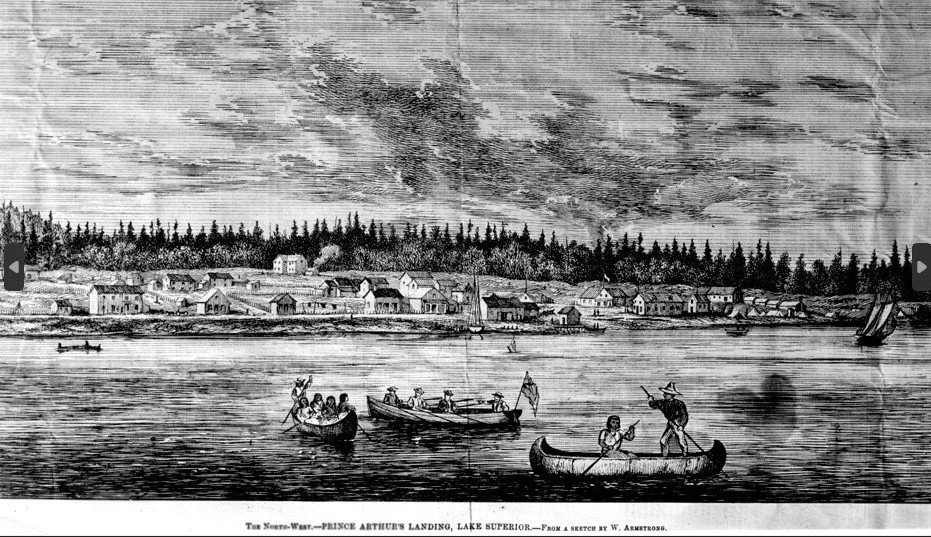
Prince Arthur's Landing
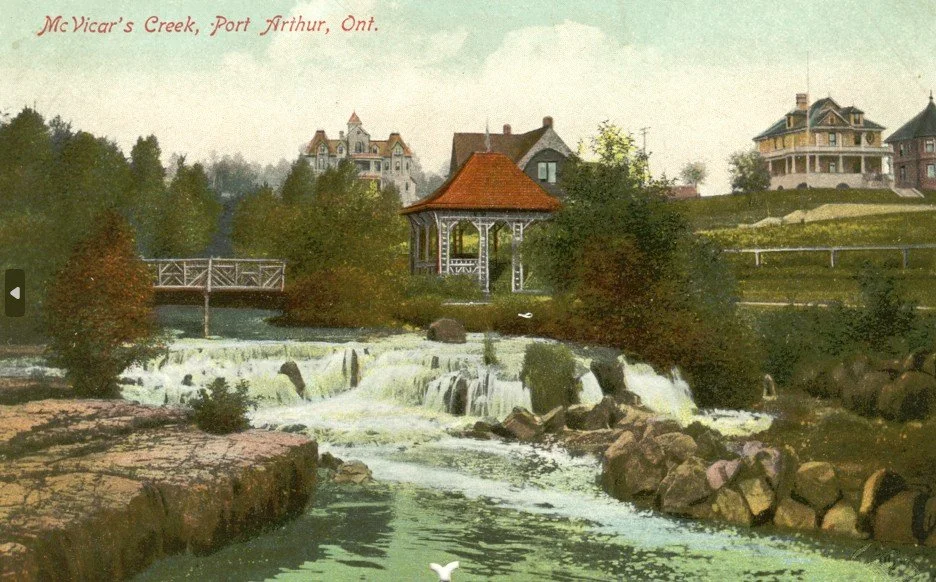
Mouth of McVicar's Creek
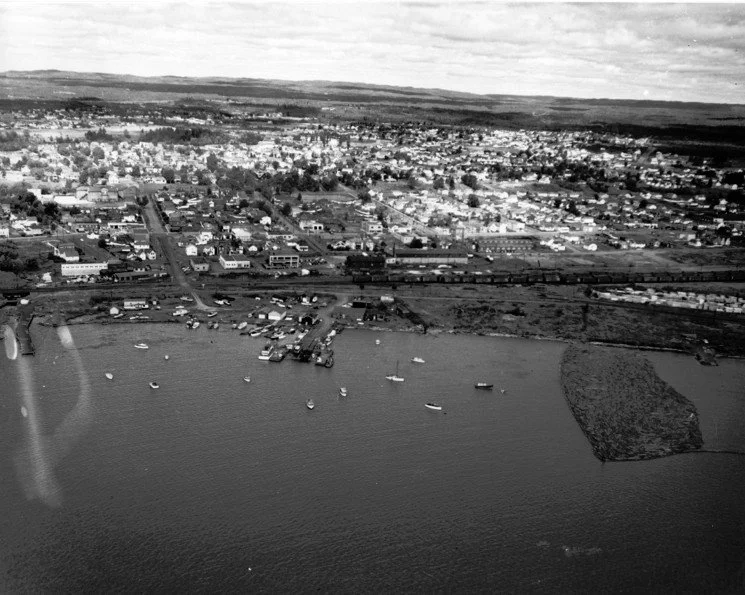
Perry's Boatyard
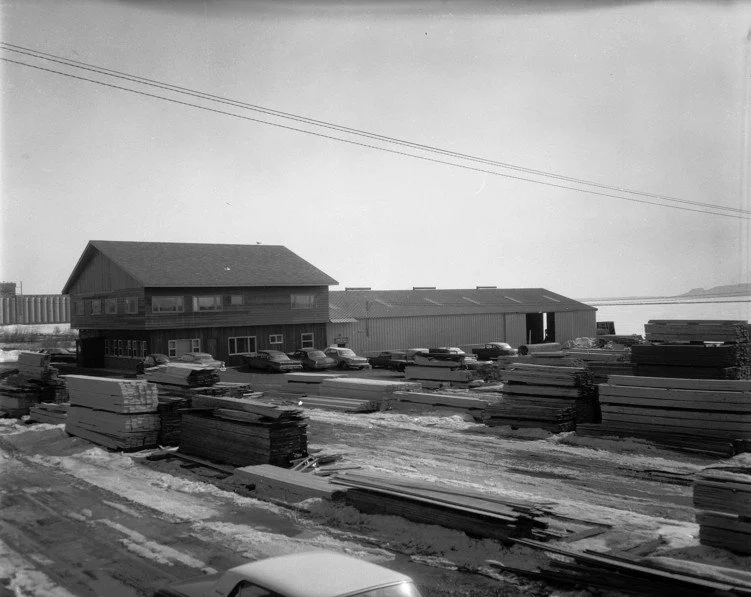
Great West Timber 1966
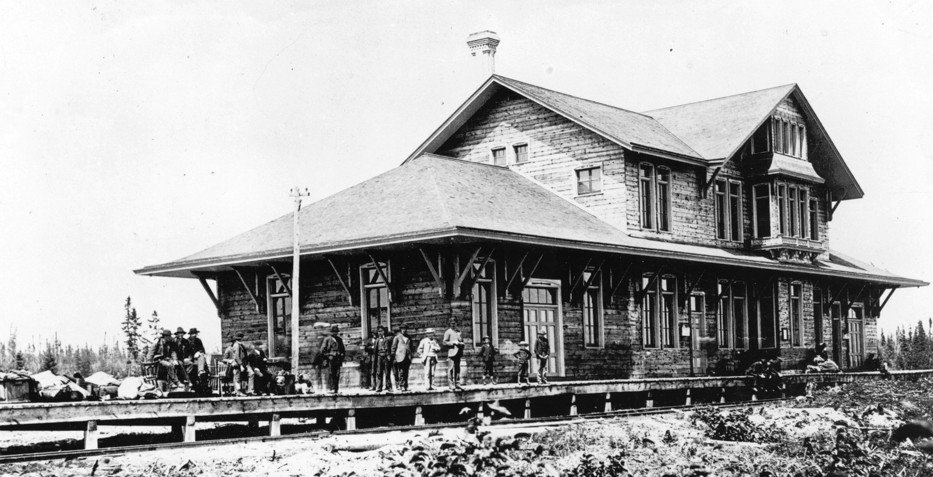
First CPR Station (across the tracks, foot of Van Horne St.)
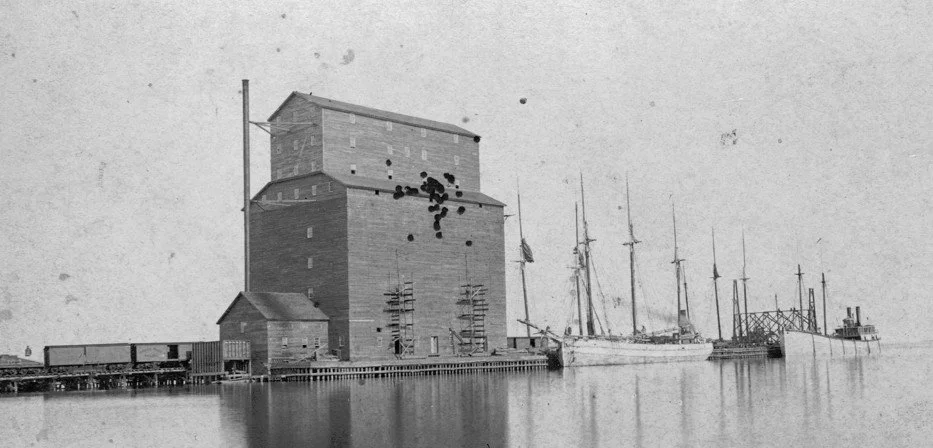
Manitoba Pool #2
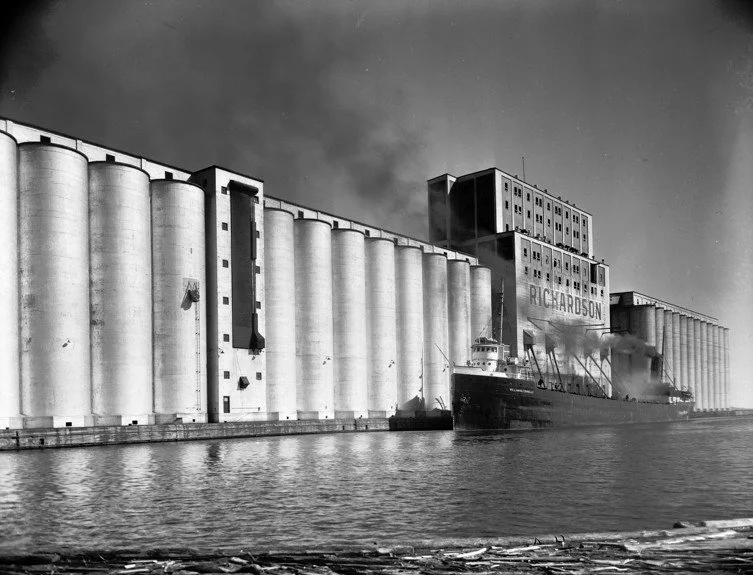
Richardson Main Elevator